
Most of us picture a well-designed garden as one that glows softly into the night — pathway lights, uplighting on trees, a warm porch glow. According to a National Association of Homebuyers survey, nearly 90% of people find exterior lighting desirable, and almost half consider it essential. But a recent Washington Post piece (syndicated by the Seattle Times) makes a compelling case that all that light may be doing more harm than good.
Wildlife ecologists like UCLA’s Travis Longcore point out that your garden doesn’t go to sleep at night, it just switches shifts. Moths, bats, beetles, and small mammals come alive after dark, many of them playing critical roles as pollinators. Artificial light disrupts this entirely. Insects drawn to light sources drain their energy circling bulbs instead of feeding and mating, leaving them vulnerable to predators and driving down populations over time. Plants that depend on night-flying pollinators suffer too. Even garden productivity can take a hit.
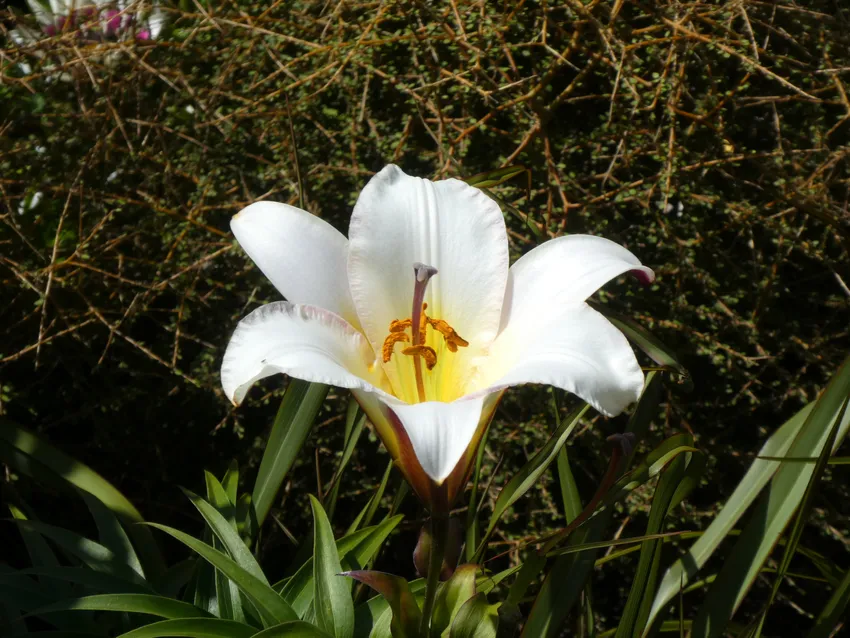
The fix, it turns out, is simple: use motion-sensor lights set to the shortest duration possible, direct any lighting downward rather than outward, and turn off what you don’t need. If you want to enjoy your garden at night, consider planting a “moon garden” – fragrant night-bloomers like jasmine, moonflower, and evening primrose that thrive in natural darkness and practically glow under moonlight.
This connects directly to the broader light pollution movement gaining momentum through dark sky advocates. Light pollution has been growing roughly 10% per year globally, erasing the Milky Way for more than a third of humanity and disrupting ecosystems at every scale from sea turtle navigation to migratory bird patterns. We’ve been hard at work spreading the word that most outdoor lighting is poorly aimed, left on unnecessarily, and far brighter than it needs to be. We can do better, neighbors! Come to our March 3rd Community Meeting and learn how.
Your backyard is a small piece of a much larger picture. Turning off the floodlight is a quiet act of restoration that connects your garden to the night sky and the creatures that depend on it.