
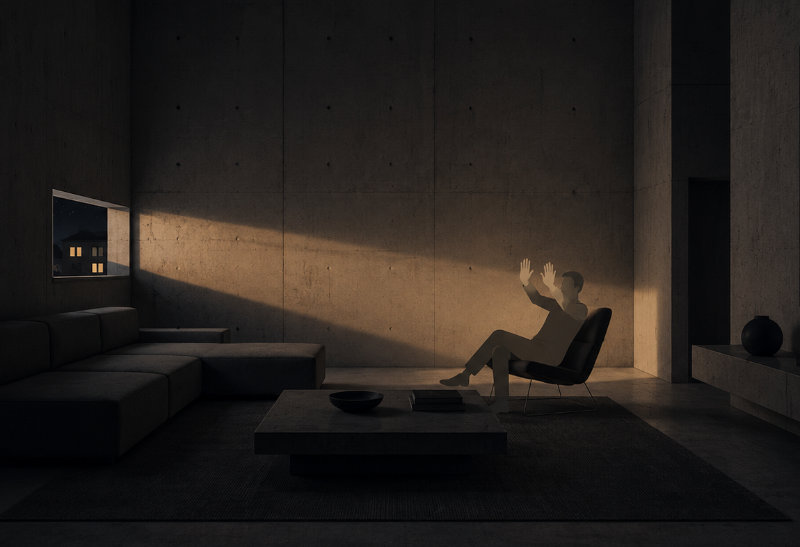
“It only takes just one person to make a change” is a message people share all of the time. When we are up against what seems to be a David and Goliath-sized challenge, that message may seem far-fetched because we wonder if and how we can even conquer it being “just one person.” For years, my belief was always, “One is not enough…that can’t possibly work.” However, as I now stand on the other side of what seemed like an impossibility back in late 2021/early 2022 to get a county ordinance updated that related to nuisance light pollution, I am happy to say that I was wrong…it IS possible for just one person to make a change!
The catalyst for my journey: a neighbor’s outdoor porch light shining on my home and spreading out onto other homes, the general surroundings, and washing out the dark sky above, stealing the peaceful enjoyment of property to which we all have a right.
After various unsuccessful attempts to talk and work with the neighbor to control their light pollution, and a visit by county staff in response to the complaint about it, the neighbor was deemed NOT in violation of the nuisance light pollution because the ordinance language at the time was written in such a way as to not support my complaint…even after all parties saw for themselves the situation from my literal viewpoints. Needless to say, the “NO VIOLATION” finding added insult to injury, but it did not cause me to give up. It only activated me.
After seeking and finding the information on the county’s website for what it took to get a code updated, I began to research various dark sky-friendly ordinances across the country to learn how the specific language should read; the impact that light pollution has on nature and humans alike,on land and in the water and skies; local and state laws that pertain to nuisance lighting; best lighting practices; different types of luminaires and corresponding shields that control the light stray; the scientific basics of illumination itself, ie. what lumens and kelvins mean and their impact; and, the angle degrees at which illumination becomes harmful to ecosystems and more so, the dark sky.
Once I was able to understand how all of these pieces worked together, I typed up what I thought to be professional, reasonable, and protective language to submit in my request for change.
Other actions I took included sharing public comment at one of the county’s planning commission meetings with a request for consideration to update the ordinance, attending in-person community development events to establish positive working relationships with county planners, and being proactive to stay in contact with county planning staff via email correspondence to check on the status of my request. Once they made the decision to accept my suggestions, I remained persistent and consistent in my advocacy and stayed involved as much as I possibly could through the remainder of the adoption process.
Our dark skies cannot fight for themselves. There are many other ways we can advocate for the remediation and preservation of our dark skies, such as the sharing of information on social media, volunteering for programs that educate people about light pollution, vending at educational booths at seasonal markets and festivals, joining the HOA board in your community, and advocating to update the community rules to include responsible lighting practices. Each person has the responsibility to be a good steward of our dark skies. Exercising the metaphorical muscles of care, action, resolution, and courage will only serve to improve their continued existence, which in turn will only serve to improve our own existence.
Keep in mind, just one CAN make a difference. Be the one.
Kelly Roberts moved to Kitsap County, Washington in 2015 from Phoenix, Arizona where she was born and raised. She’s been a lifelong advocate for nature and has always believed that the responsibility of its stewardship is for everyone to carry.